


RIDIVIHARAYA - The Leading light of Ridigama |
||||
 |
Ridi Viharaya, also known as the Silver Temple, is a historically significant Buddhist temple located in the village of Ridigama, Sri Lanka. It dates back to the 2nd century BCE and holds a special place in Sri Lankan history and culture.
Varaka Valandhu Viharaya |
|||||
 |
|
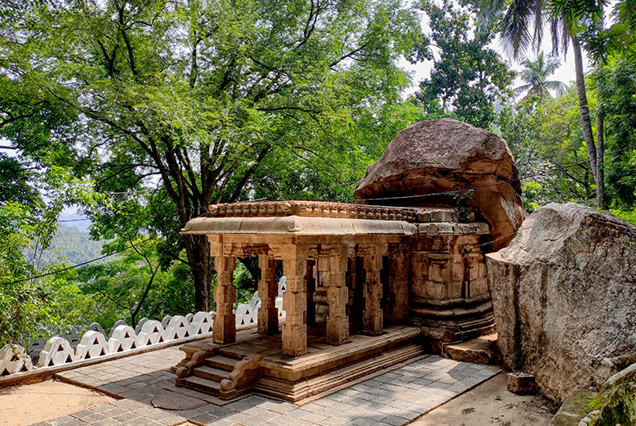
This "Varaka Valandhu Viharaya" is within the Ridi Viharaya complex. This is a very important part of Ridi Viharaya with a fascinating history. "Varaka" refers to the jackfruit tree, as we discussed. "Valandhu" means "to eat" or "to partake." So, the name roughly translates to "The Temple of the Jackfruit Tree where (offerings) were partaken."
HistoryThis is considered the oldest and most significant part of the Ridi Viharaya complex. Legend says that traders resting near a jackfruit tree discovered silver at this location, which was then used to build the Ruwanwelisaya stupa. In gratitude, King Dutugemunu built the Varaka Valandhu Viharaya near that very jackfruit tree in the 2nd century BCE.Connection to TradeThe name and the legend suggest a strong connection to traders who used the area as a resting place on their routes. This highlights the importance of Ridi Viharaya as not just a religious site but also a place of cultural exchange and economic activity.Architectural FeaturesThe structure is quite unique, resembling a Hindu temple in its appearance. It's a heavy, squat building constructed from large stone slabs, supported by ornately carved pillars. This distinct architecture suggests influences from the Polonnaruwa period. |
|||
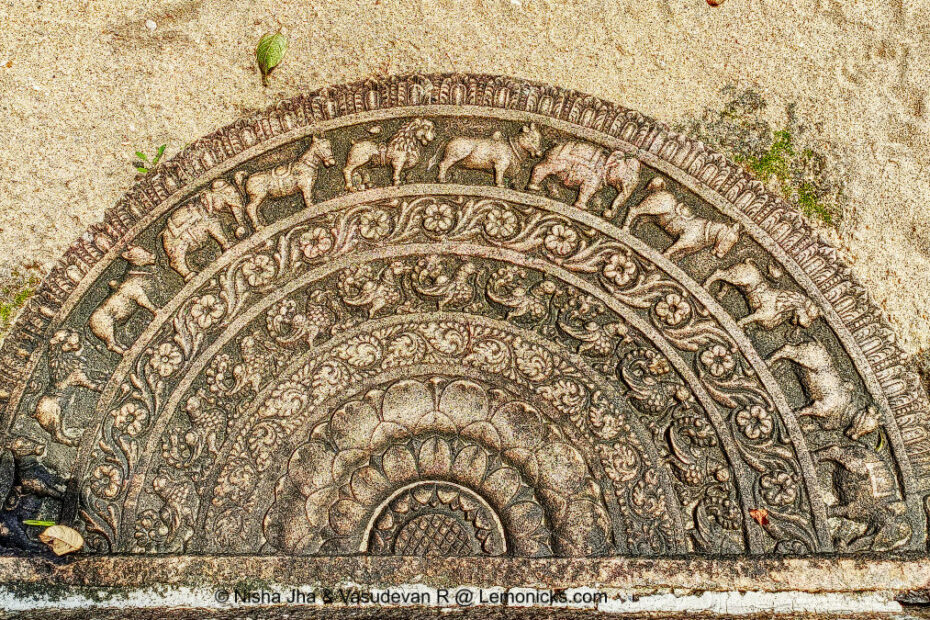
MoonstoneThe most prominent moonstone at Ridi Viharaya is found at the entrance to the Uda Viharaya (Upper Temple). This is a later addition to the complex, built during the Kandyan period. |
|||
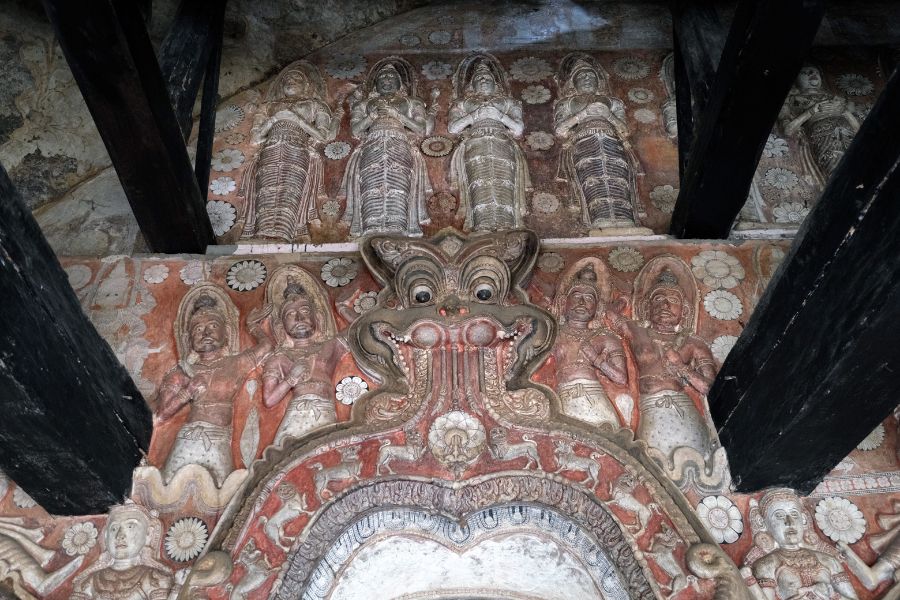
StyleThis particular moonstone exhibits characteristics of the Kandyan period, which differs from the earlier Anuradhapura and Polonnaruwa styles.ShapeUnlike the semi-circular shape typical of earlier periods, this moonstone is described as having a more semi-circular or even somewhat triangular shape. This is a key feature of Kandyan moonstones.MotifsWhile the traditional motifs like the half-lotus, concentric bands of animals (elephants, horses, lions, bulls), and flames are still present, they might be stylized in a way characteristic of the Kandyan period.
|
 |
||
SignificanceThe presence of a moonstone at the entrance to the Uda Viharaya signifies its importance as a sacred space. The moonstone, with its symbolic representations of the cycle of Samsara (rebirth), serves as a transition between the mundane world and the sacred space of the temple. |
|||
 |
 |
 |
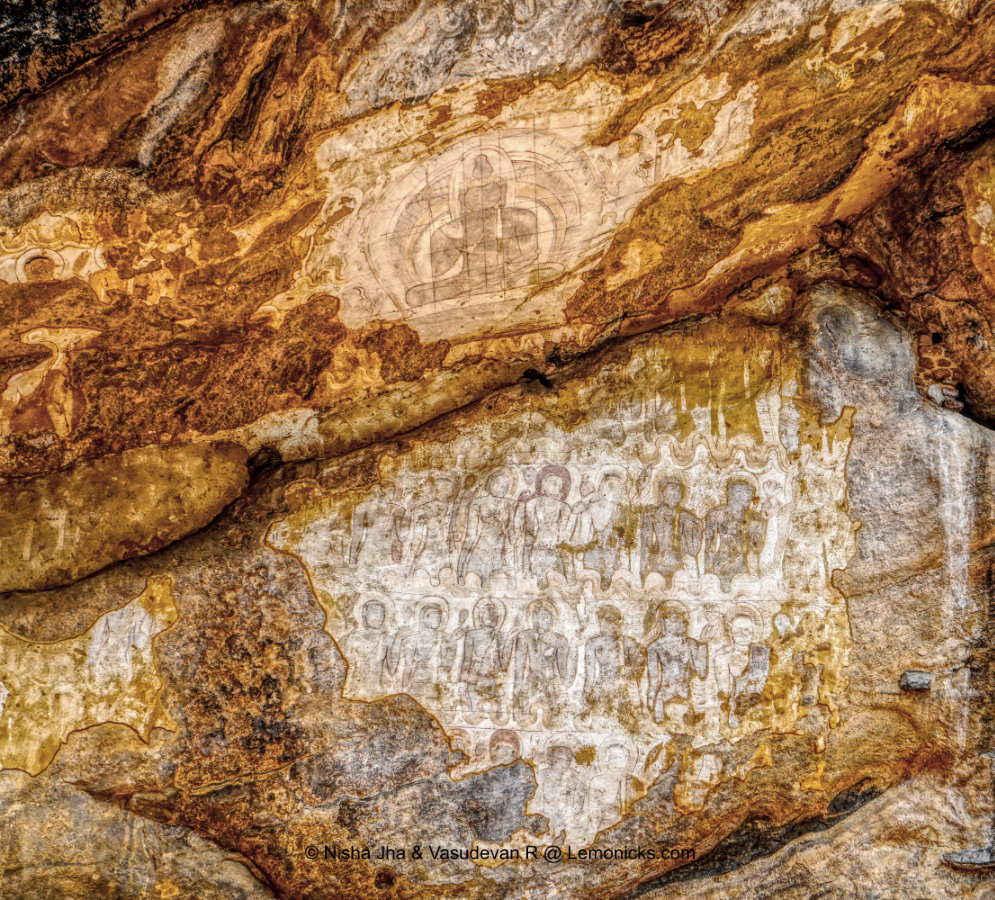 |
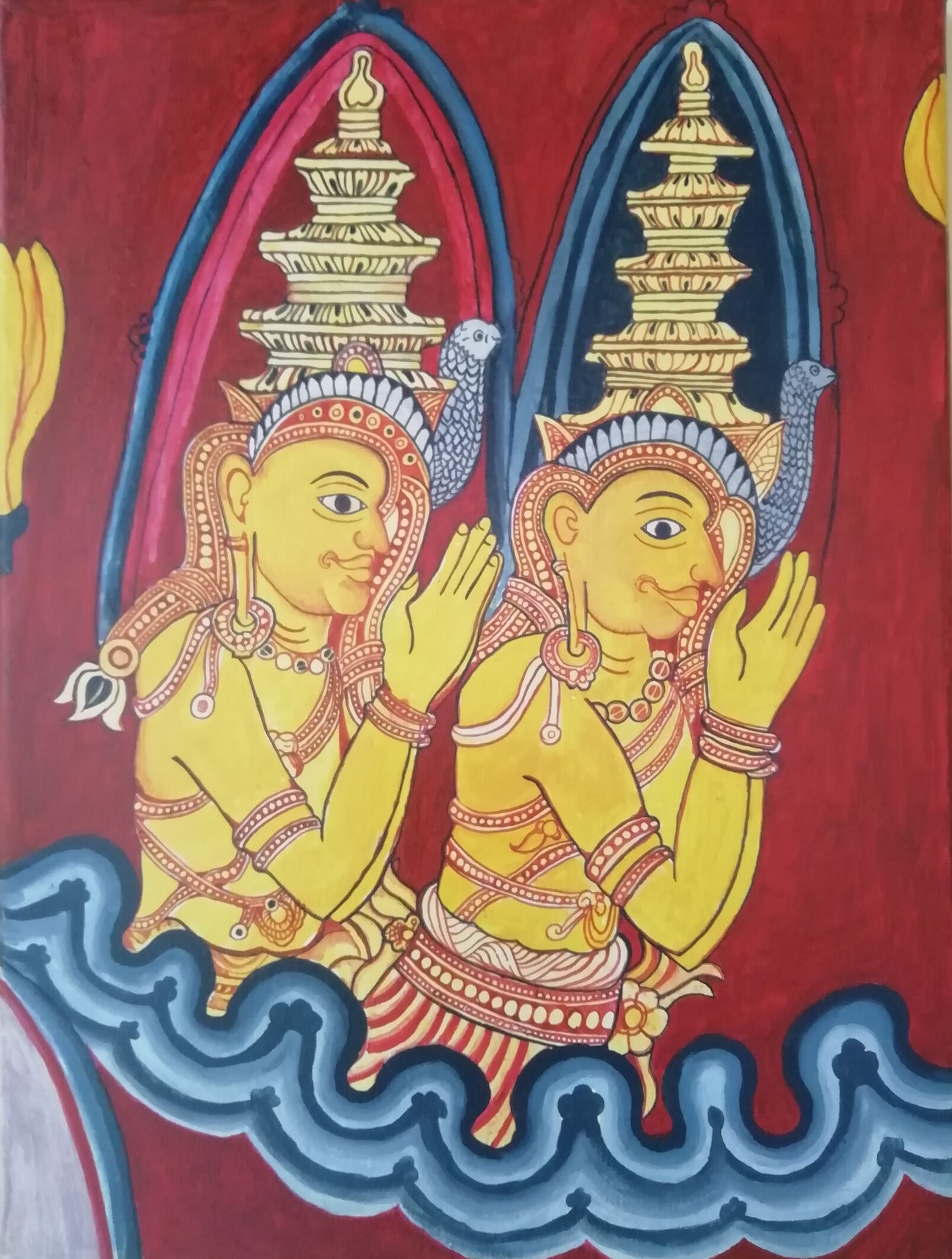
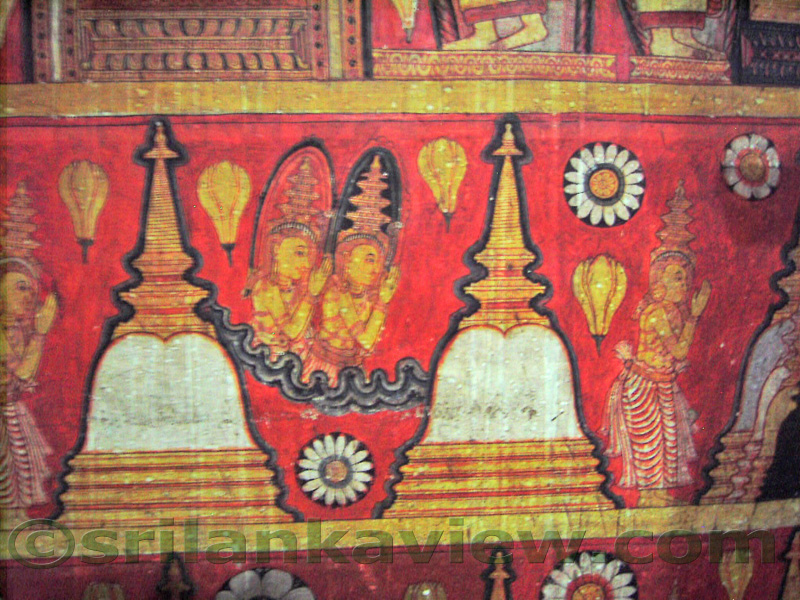
Ridi Viharaya is a treasure trove of Sri Lankan art, showcasing exquisite carvings and paintings that provide a glimpse into the island's rich cultural and religious heritage.
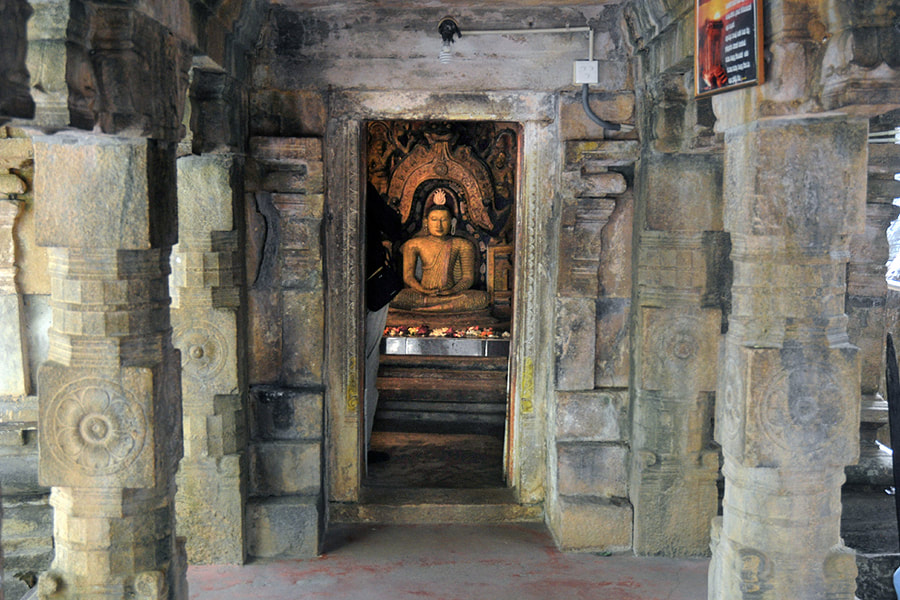
Seated Buddha Statue |
||||
 |
|
The central focus is a seated Buddha statue, likely made of stone or a similar material. The posture appears to be the Dhyana Mudra (meditation pose), with hands resting in the lap.
Stone PillarsThe most distinctive feature is the presence of intricately carved stone pillars. These pillars are characteristic of Kandyan-era architecture, which is prevalent at Ridi Viharaya. The carvings on the pillars often feature floral motifs, geometric patterns, and sometimes animal figures.Entrance or doorwayThe Buddha statue is positioned at the end of what appears to be a short passageway or within a recessed area, framed by the stone pillars. This suggests an entrance to a shrine or a specific part of the temple complex.Simple backgroundThe background behind the Buddha statue is relatively simple, possibly a painted wall or a natural rock surface within a cave. This is also consistent with the environment within Ridi Viharaya's cave temples. |
||
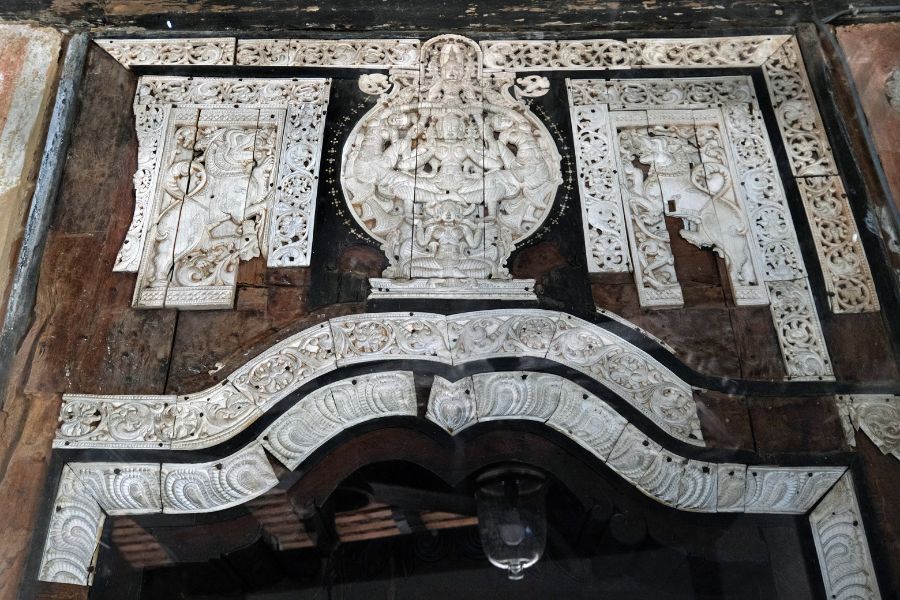
The Ivory Door of Ridee ViharayaThe intricate ivory carvings adorn the doorway leading to the Uda Viharaya (Upper Temple), which houses a seated Buddha statue. This placement emphasizes the importance of this artwork as a gateway to a sacred space.Unfortunately, due to past vandalism, the ivory carvings have suffered some damage. However, efforts have been made to preserve and protect this valuable piece of Sri Lankan art. The ivory door of Ridi Viharaya is a testament to the incredible skill and artistry of Sri Lankan craftsmen. It's a must-see feature for anyone visiting the temple, offering a unique glimpse into the island's rich cultural heritage. |
|||
Pancha Nari GetayaThe centerpiece of the ivory carving is known as the "Pancha Nari Getaya" (පංච නාරී ඝටය), which translates to "the figure of five women entwined." This is a complex and fascinating design where five female figures are intricately interwoven to create the illusion of a vase or a knot. It's a masterpiece of illusion and craftsmanship, requiring close inspection to discern the individual figures.SymbolismThe exact meaning of the "Pancha Nari Getaya" is open to interpretation, but it's believed to represent concepts such as: Unity and harmony: The intertwining of the figures symbolizes the interconnectedness of all beings. Feminine energy: The depiction of women may represent fertility, creativity, and the nurturing aspects of life. Skill and artistry: The complexity of the design showcases the exceptional skill and artistry of the craftsmen who created it.Other detailsIn addition to the "Pancha Nari Getaya," the ivory door frame also features other intricate carvings, including: Lions: Two lions flank the central design, symbolizing strength and protection. Floral motifs: Delicate floral patterns and creepers add to the overall decorative richness. Historical significance: The ivory carvings are believed to date back to the Kandyan period, highlighting the long history of artistic traditions at Ridi Viharaya. |
 |
||
SignificanceThe presence of a moonstone at the entrance to the Uda Viharaya signifies its importance as a sacred space. The moonstone, with its symbolic representations of the cycle of Samsara (rebirth), serves as a transition between the mundane world and the sacred space of the temple. |
|||
 |
 |
 |
 |
Find us in map 
Covid 19 second wave in SriLanka
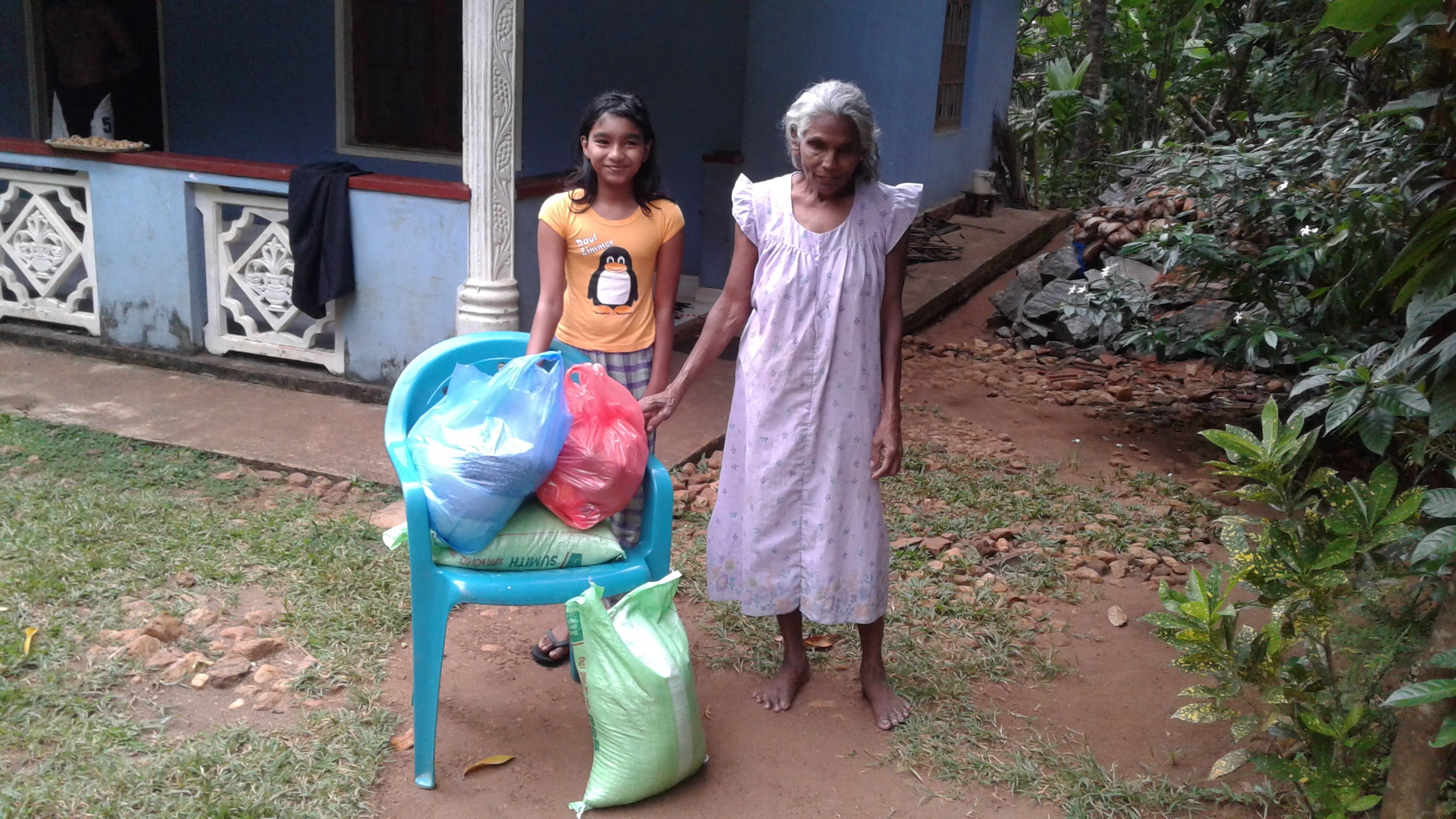
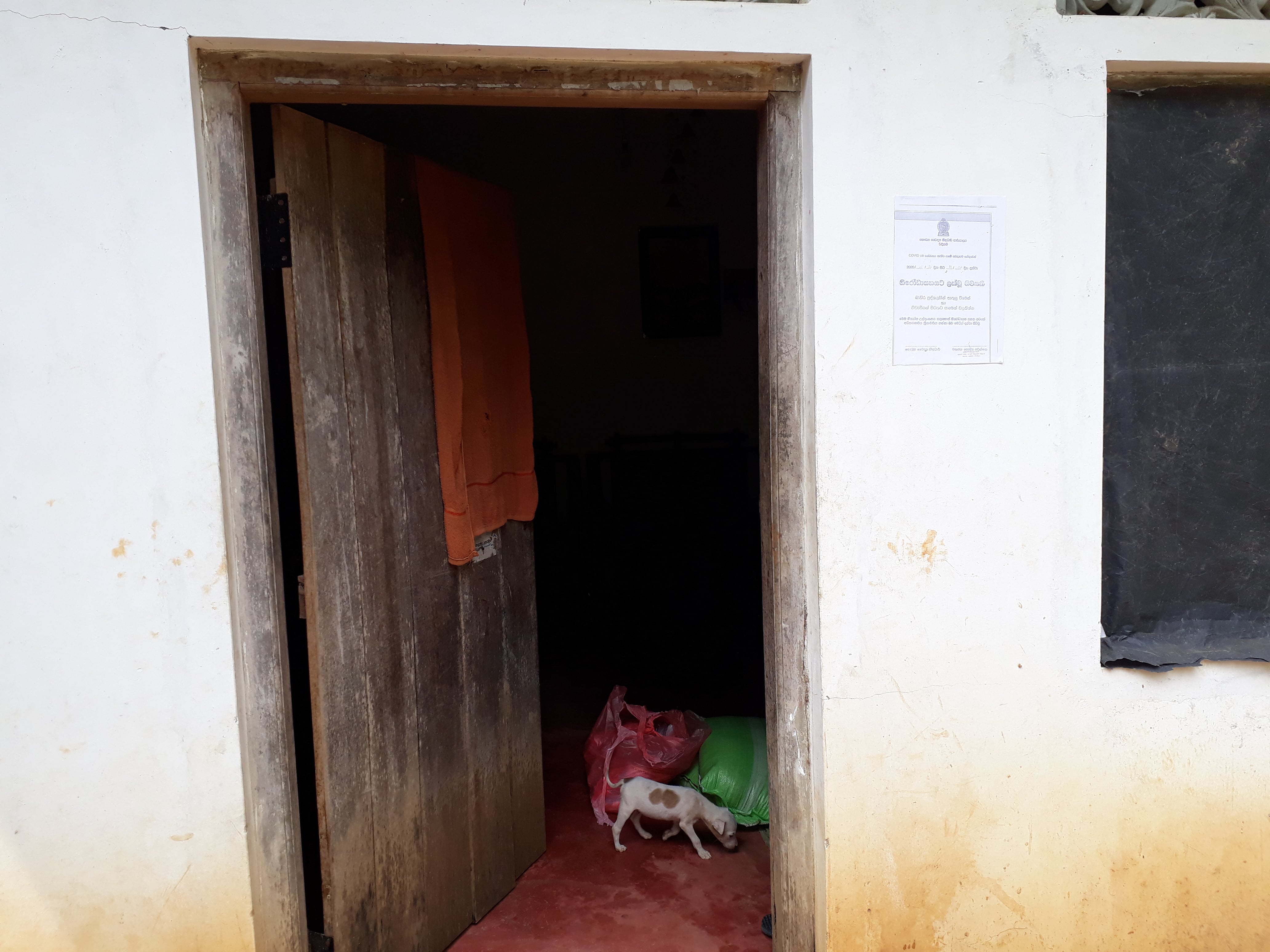
Covid 19 has hit SriLanka one again and this time the spread has impacted the lives of people more severly. Covid affected patients are being found in hundreds on daily basis via the PCR test. So the number of people who undergo quarantine has also increased resulting in unable to continue the daily routine normaly.
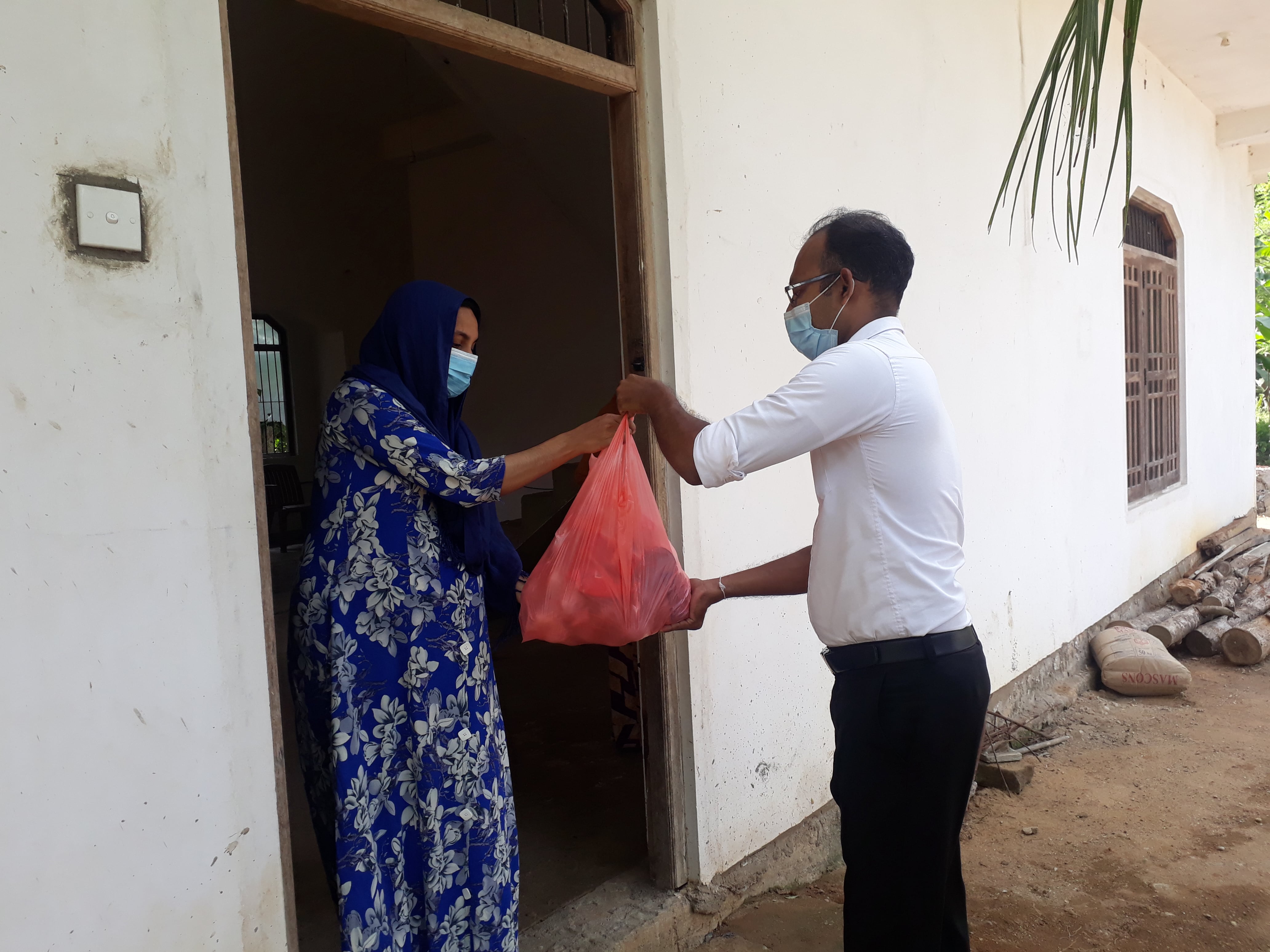
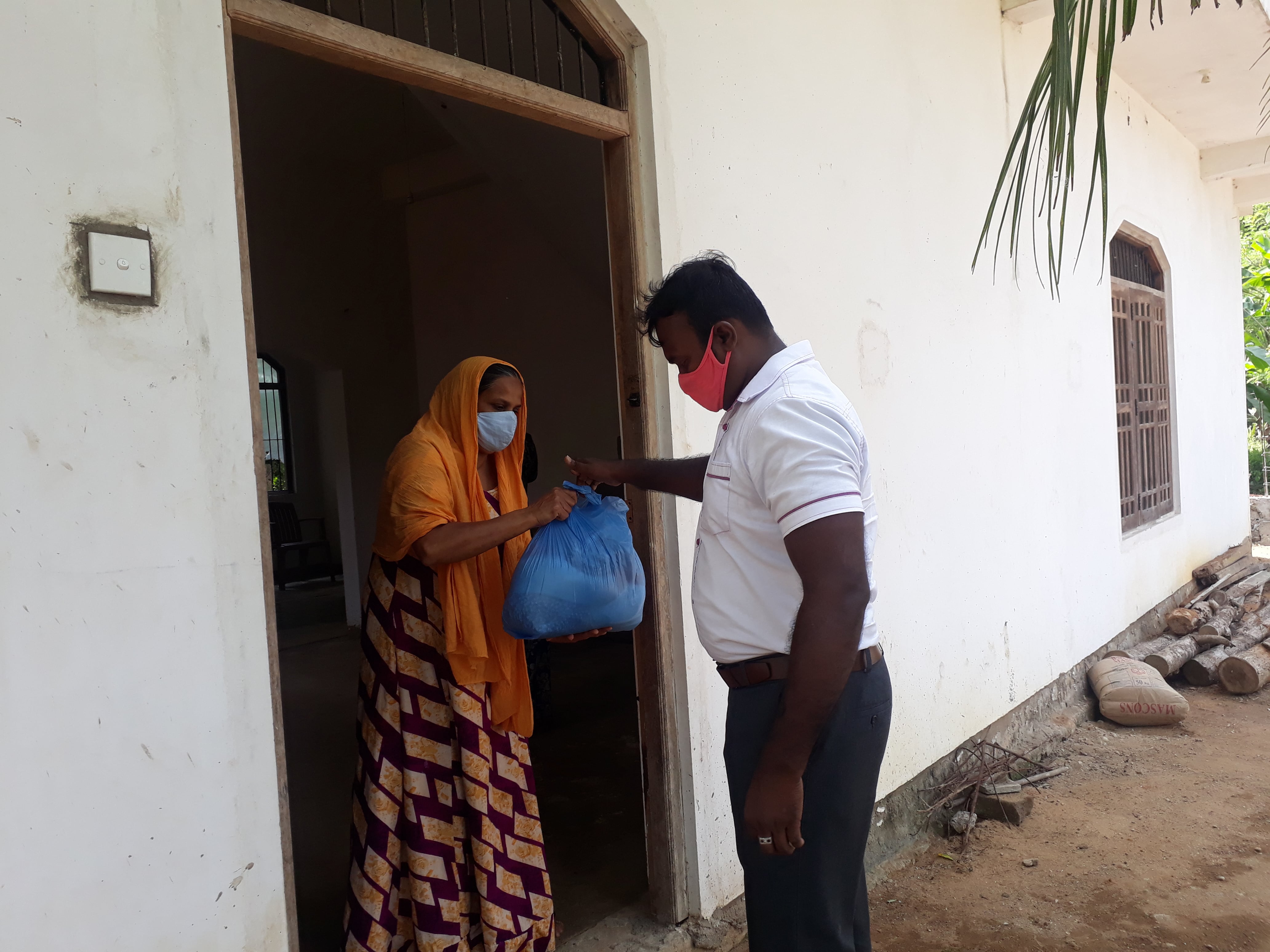
As the first point of contact the divisional secretariats are playing their role like previous time in providing relief and necessary facilities.
 |
 |
 |
||
 |
 |
 |
To know more about COVID-19, please visit the below official pages
 |
|
|
|
|
 |
|
|
|
|
 |
|
|
|
|
 |
|
|
|
|
 |
Our activities during the COVID pandemic
Services Rendered
- Water supply to the Elders' Home.
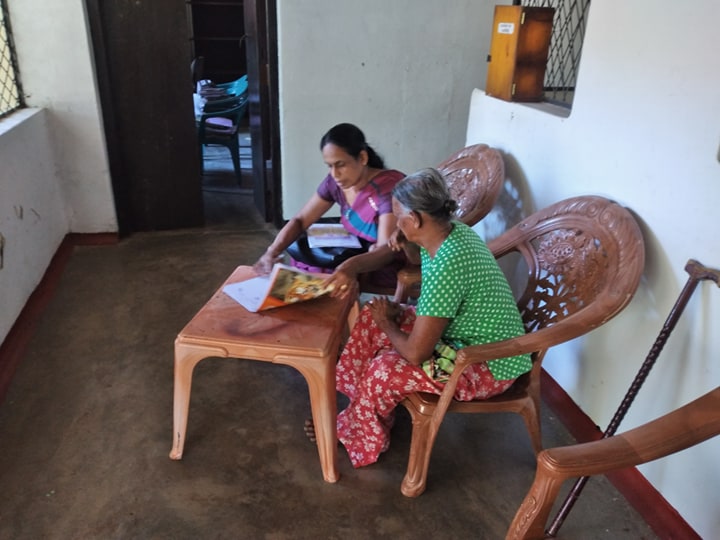
- Medicines for the patients were delivered to them with the help of Development Officers. (As those who regularly intake medicines are unable to attend the clinic, The medicines were brought to the Divisional Secretariat Office and were distributed)
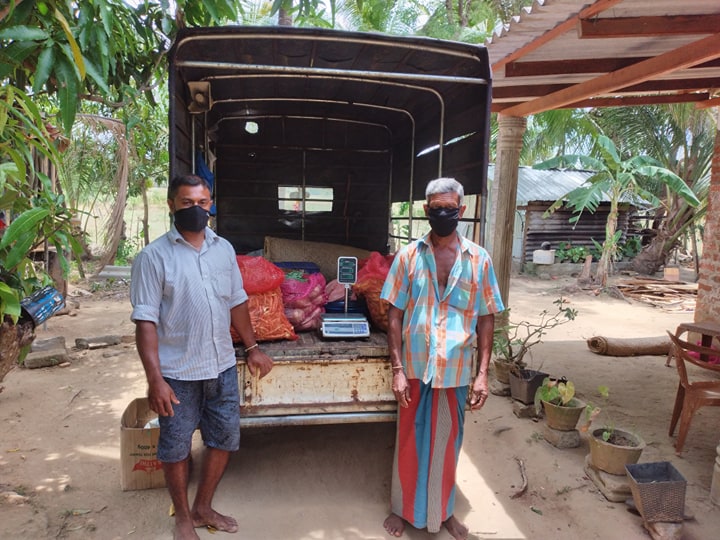
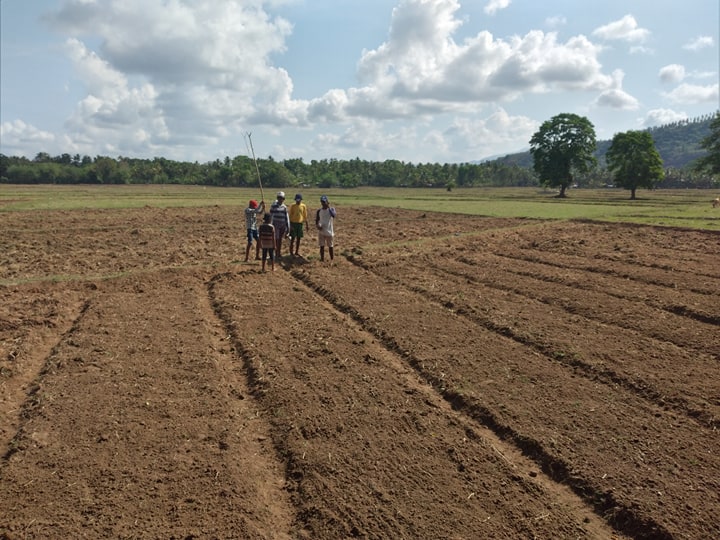
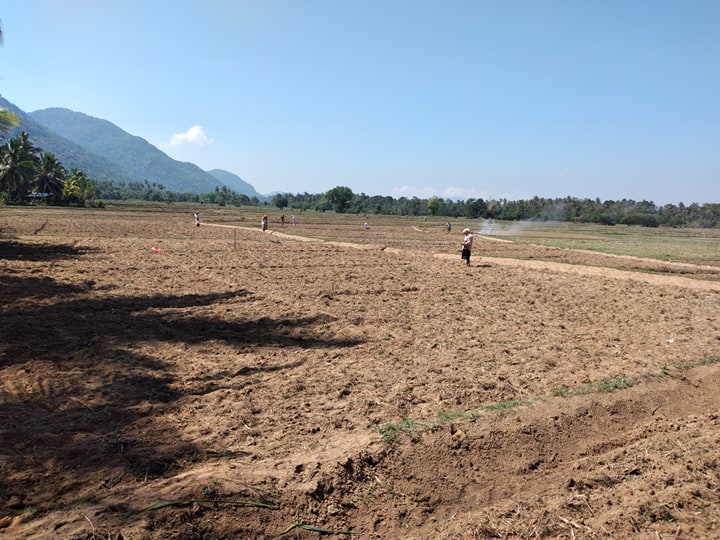
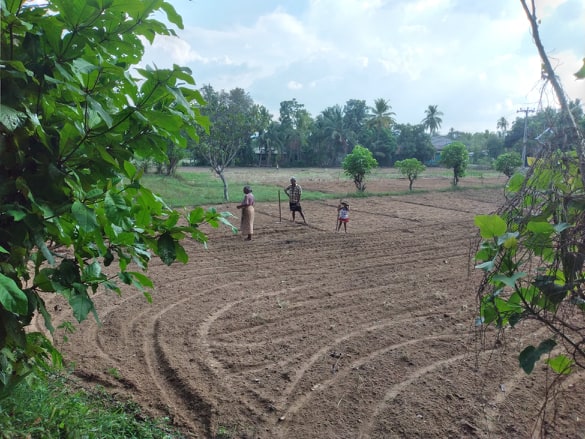
- Vegetable seeds and Other food crop seeds were distributed among the people of the division with the help of Samurdhi Officers.
- Couple of Grama Niladhari Officers engaged and encouraged youth and other people in cultivating food crops.
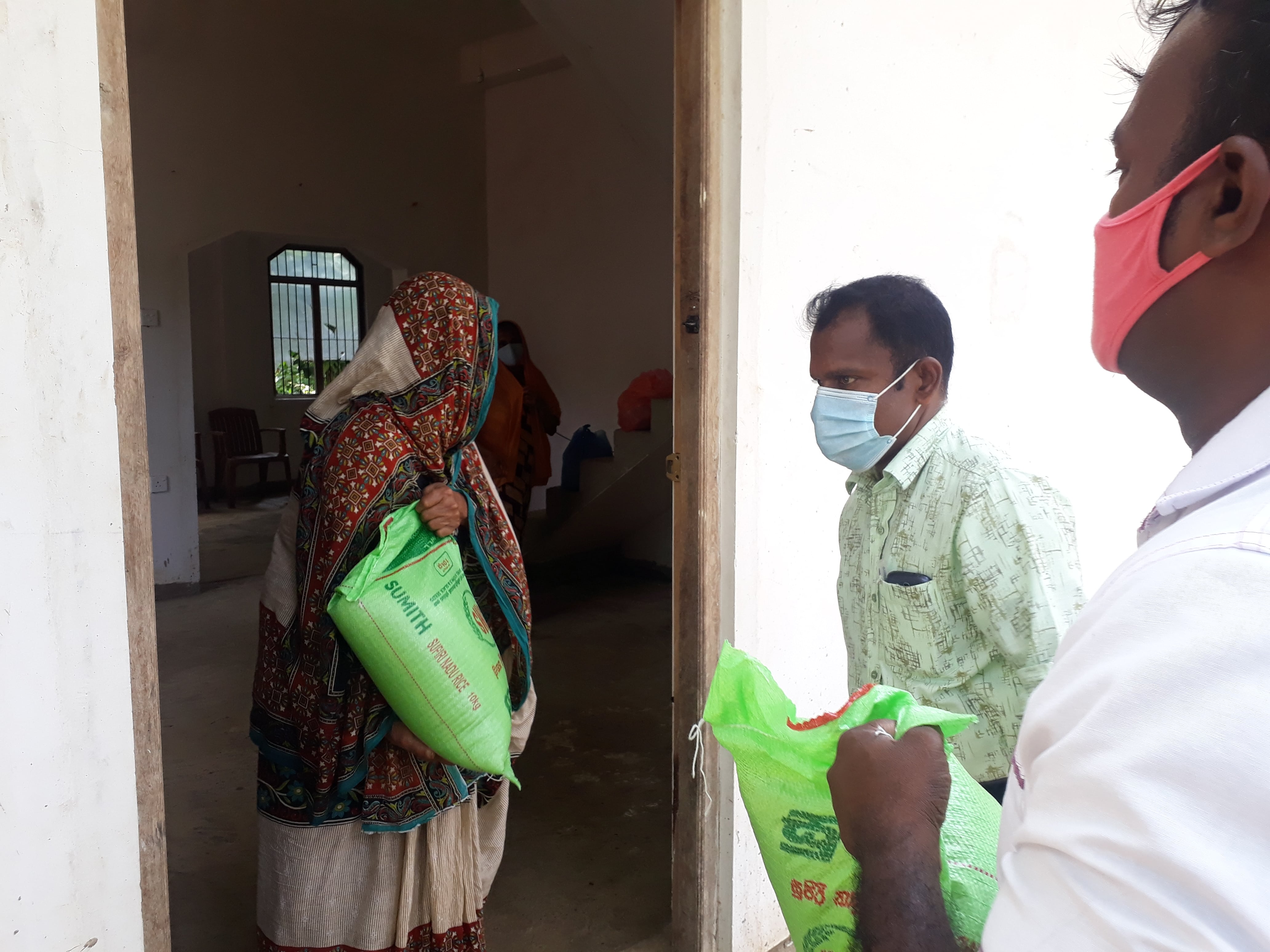
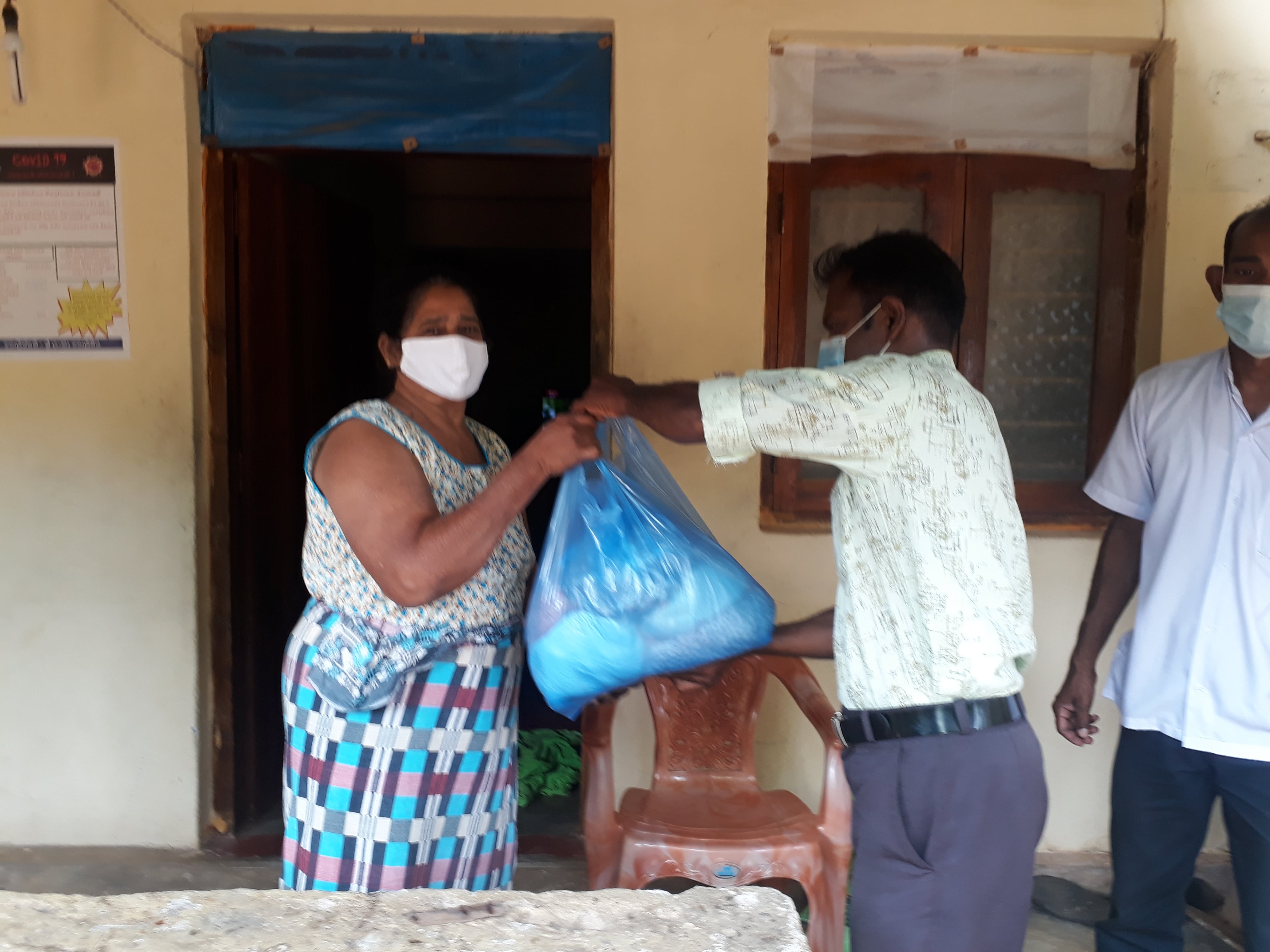
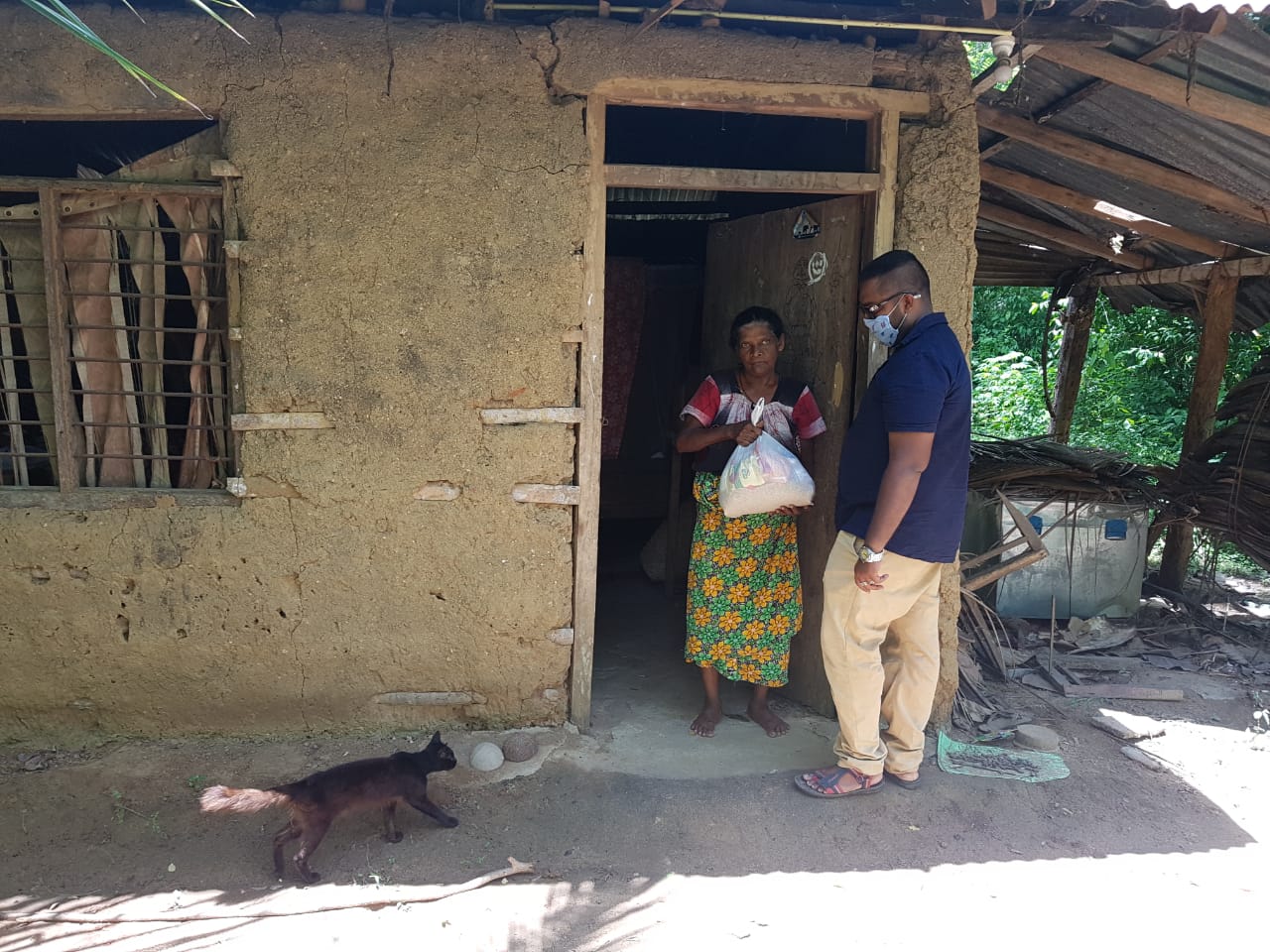
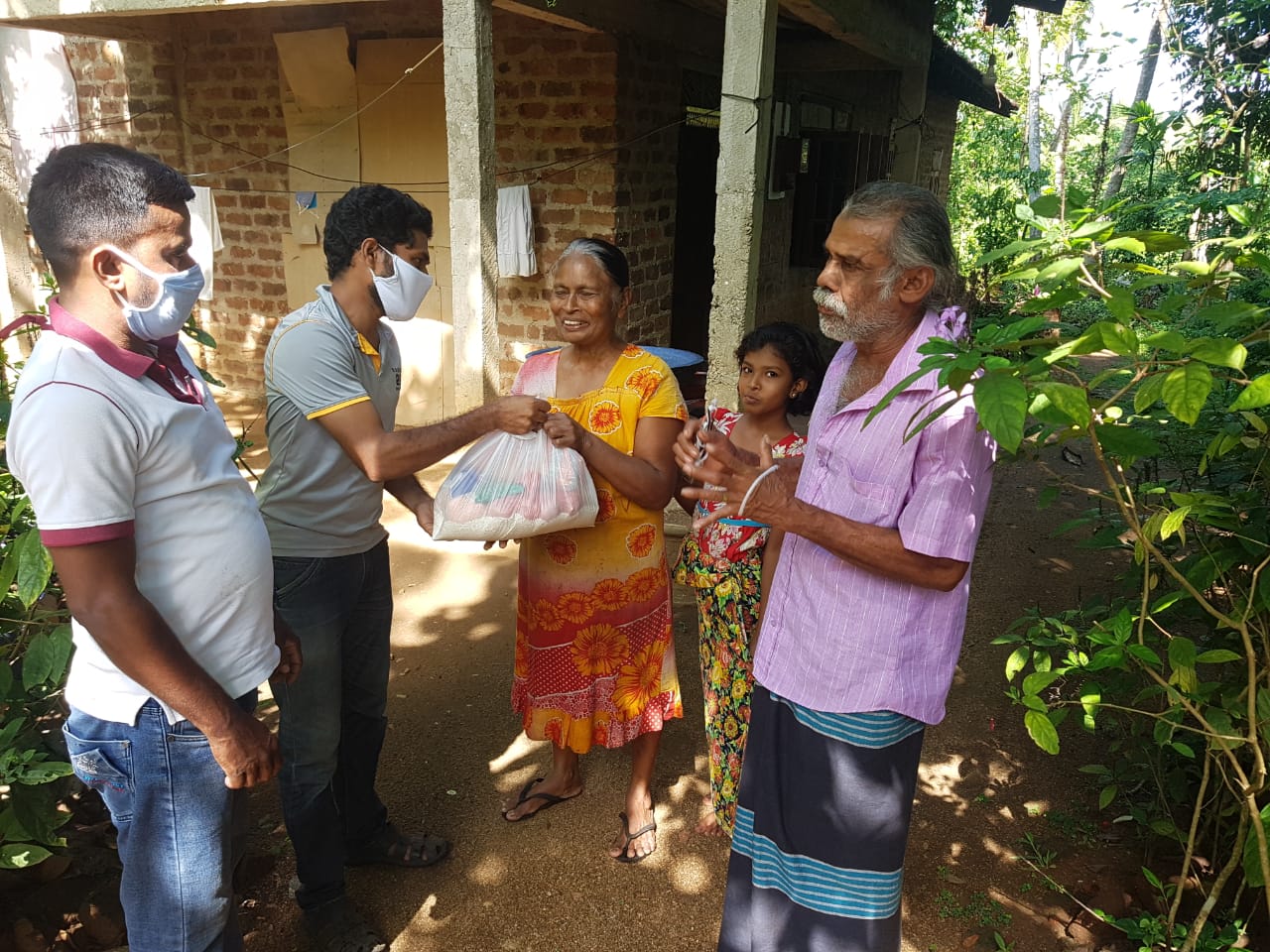
- Dry ration parcels were distributed to the needy families by Grama Niladhari Officers as a relief activity.
- Disaster Management officers are active in promoting awareness among public, collecting data on quarantine, and collecting information about the people affected.
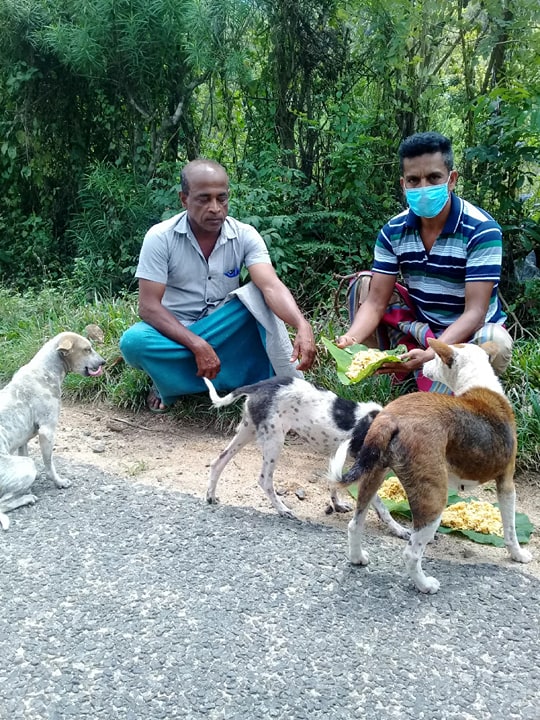
- Stray dogs on road were fed with the help from people of the area.
 |
|
 |
|
 |
 |
|
 |
|
 |
 |
|
 |
|
 |
Tasks Carried Out
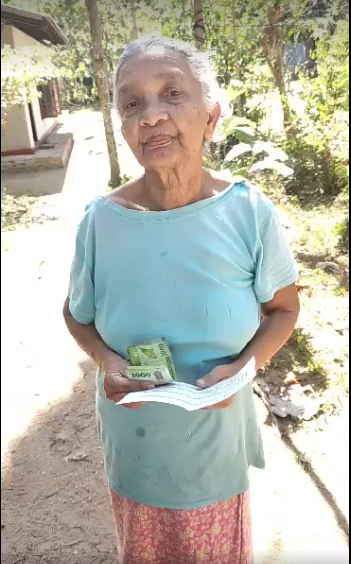
- Allowances for disabled persons, elderly were handed over by the Grama Niladaari.
- Samurdhi Allowances were handed over to the people by Samurdhi Officers.
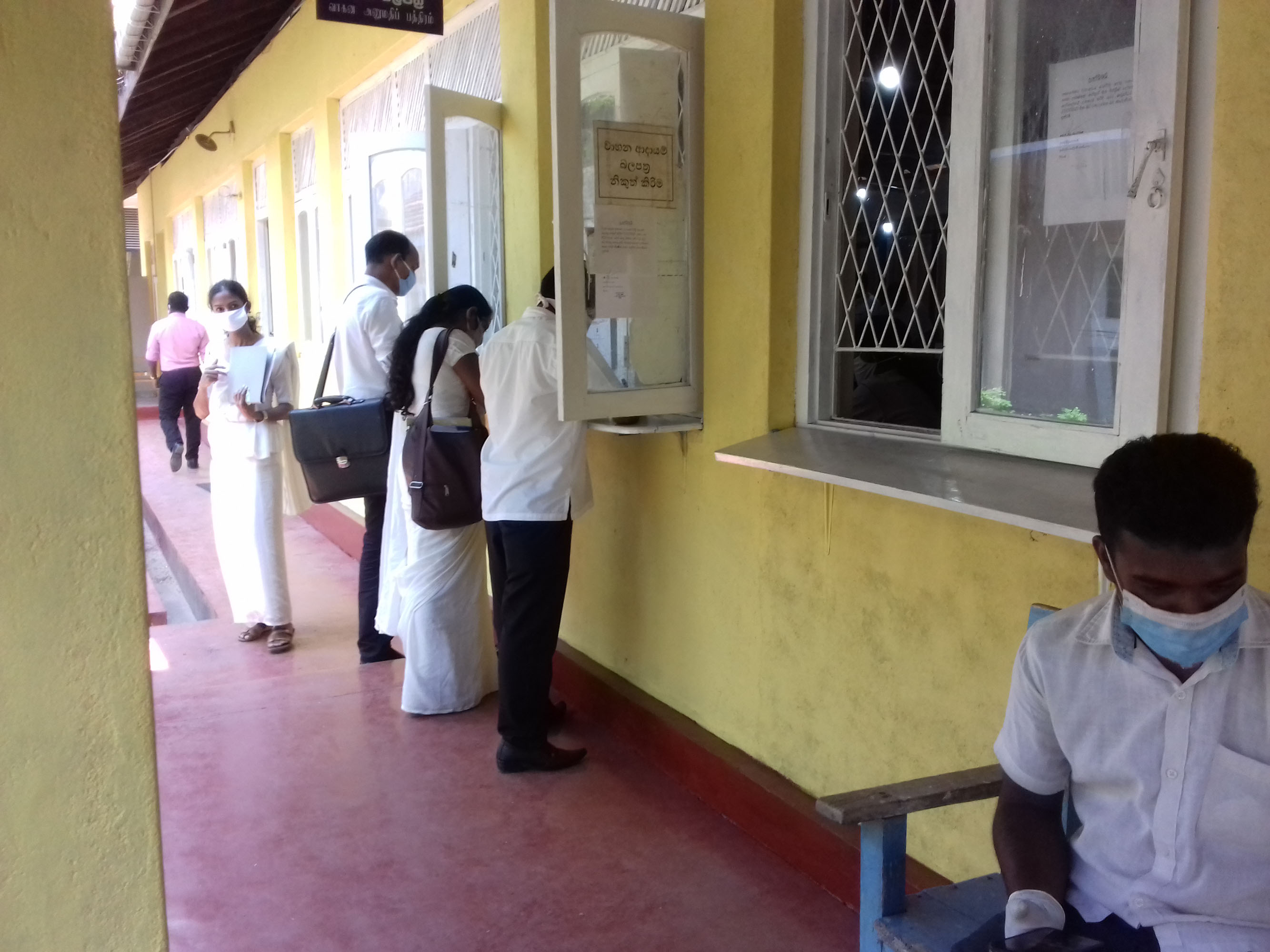
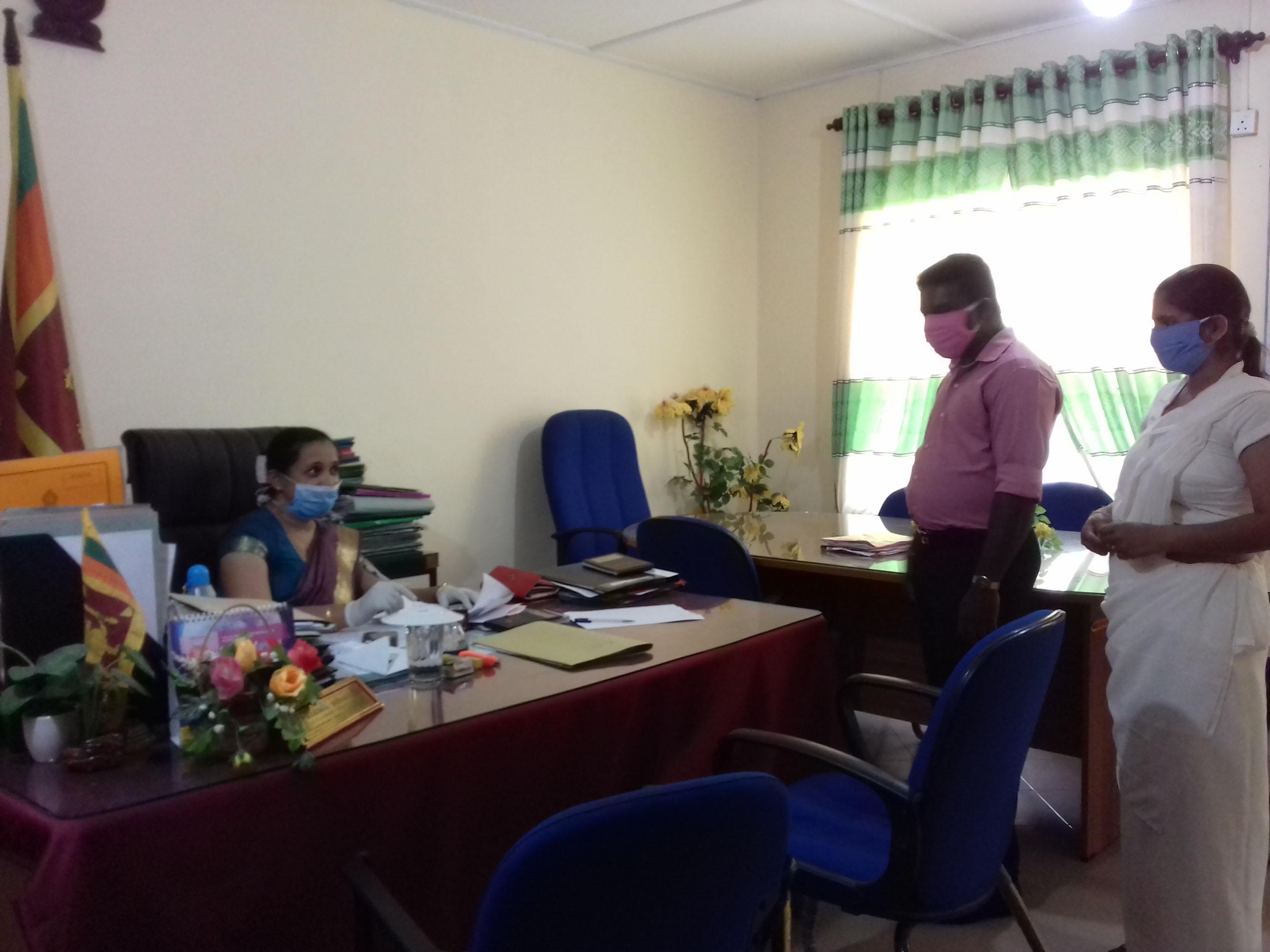
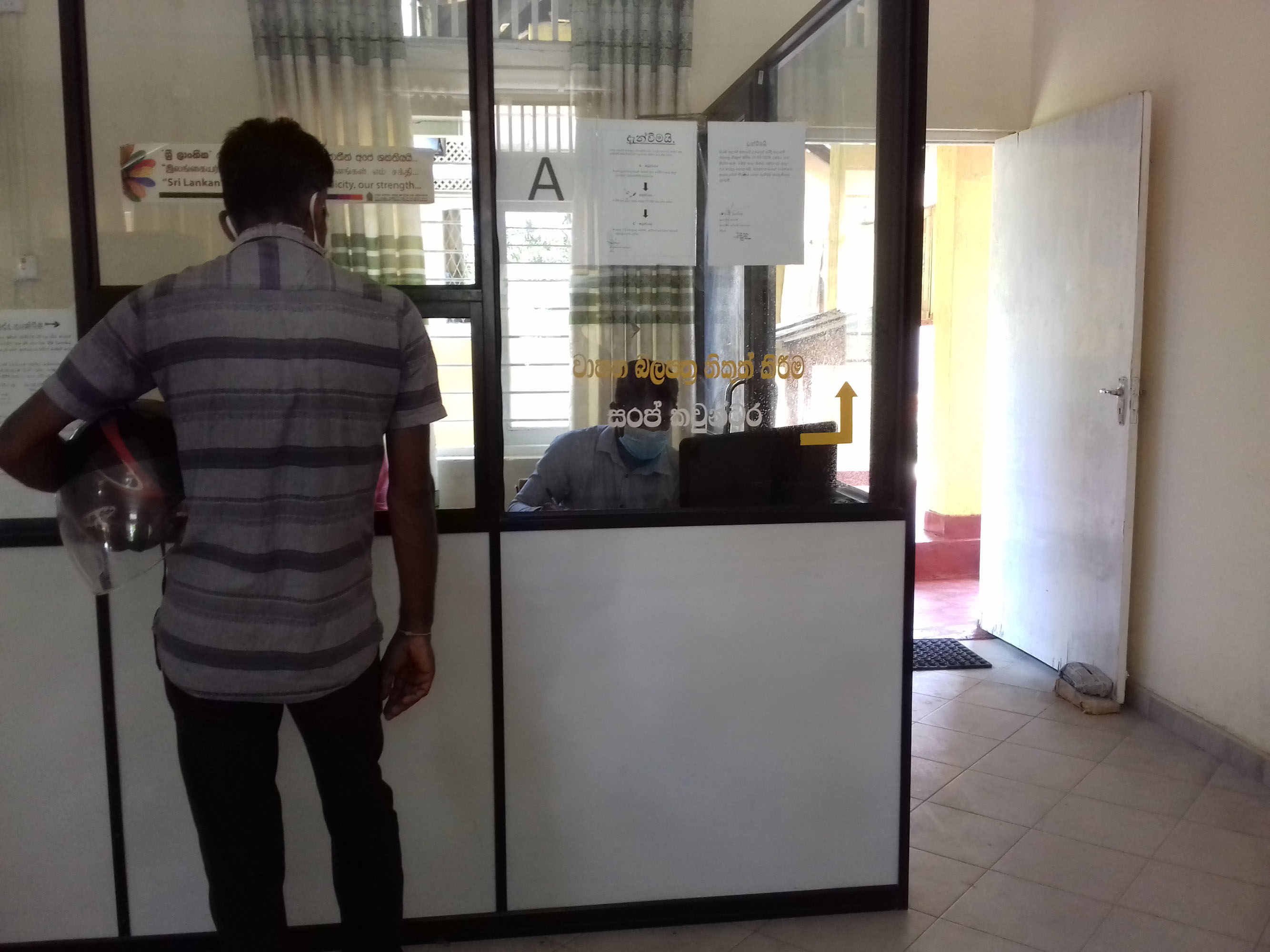
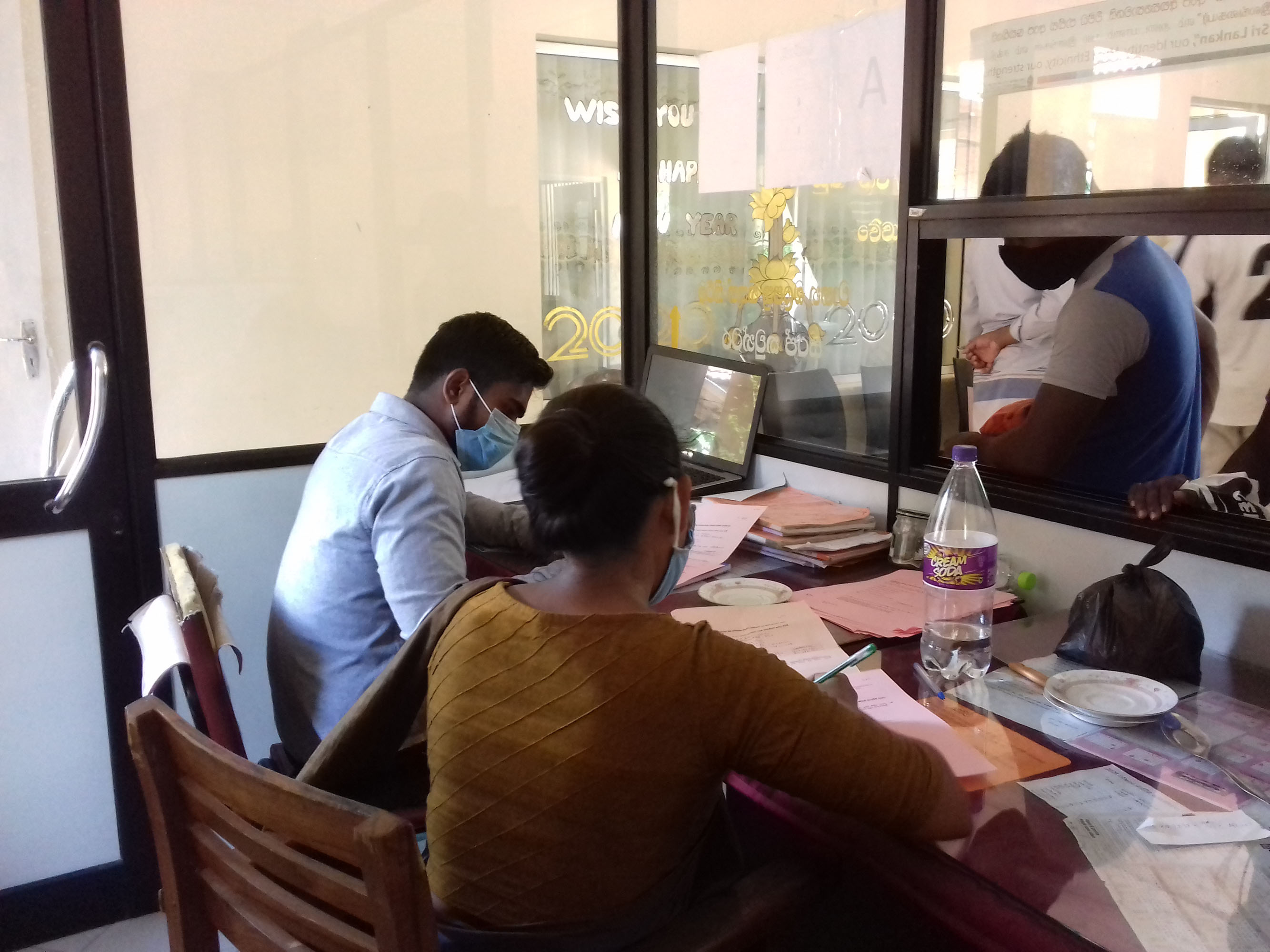
- Permits for essential services travel and essential travel are authorized by the Divisional Secretariat to enable the public to minimize the difficulties.
 |
|
 |
|
 |
 |
|
 |
|
 |
Actions at office
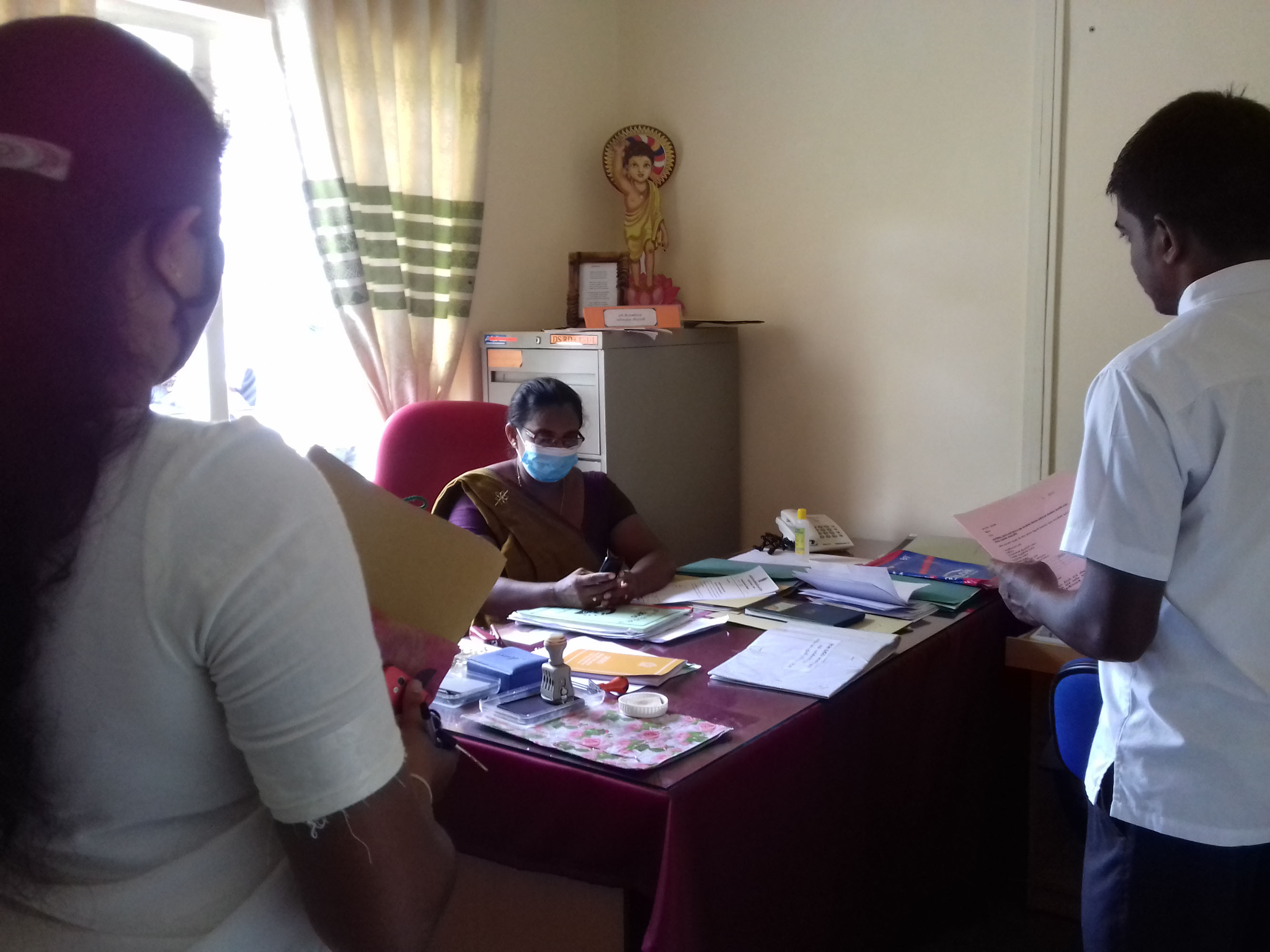
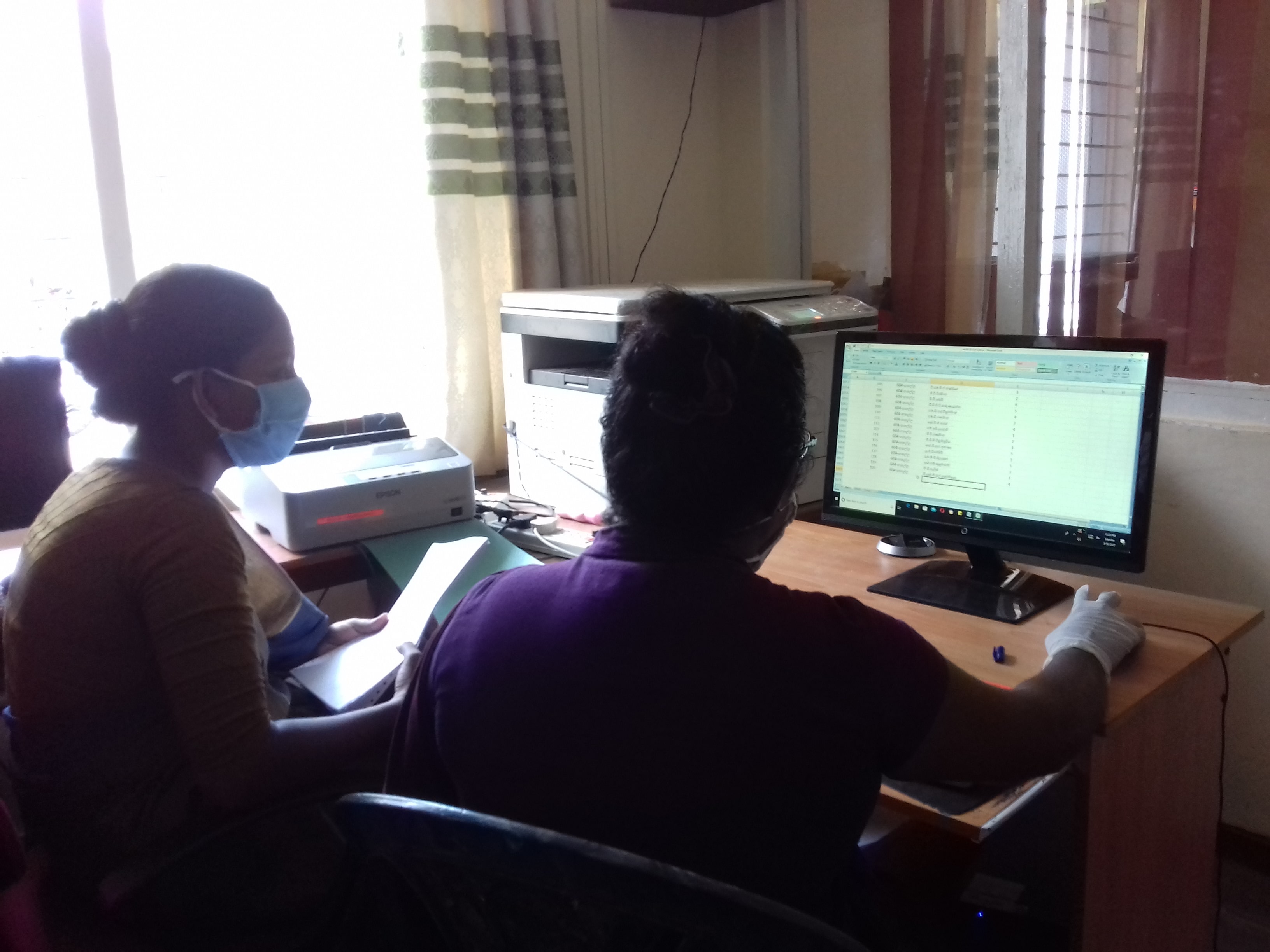
- Staffs were called for duty on shift basis so as to continue rendering the service to public 24*7.
- Gloves, Masks, Hand sanitizers were readily available for the staff to work with safety.
- Arrangements were made so as to avoid the interaction and maintain the desired distance.
- Disinfection was carried out through the entire office premises. And frequent cleaning takes place.
- Facilities are readily available to wash hands before and after entering the office.
Novel Corona virus awareness
The recent outbreak of epidemic COVID-19 has caused a tense situation worldwide. Taking preventionary measures is the best we can do.
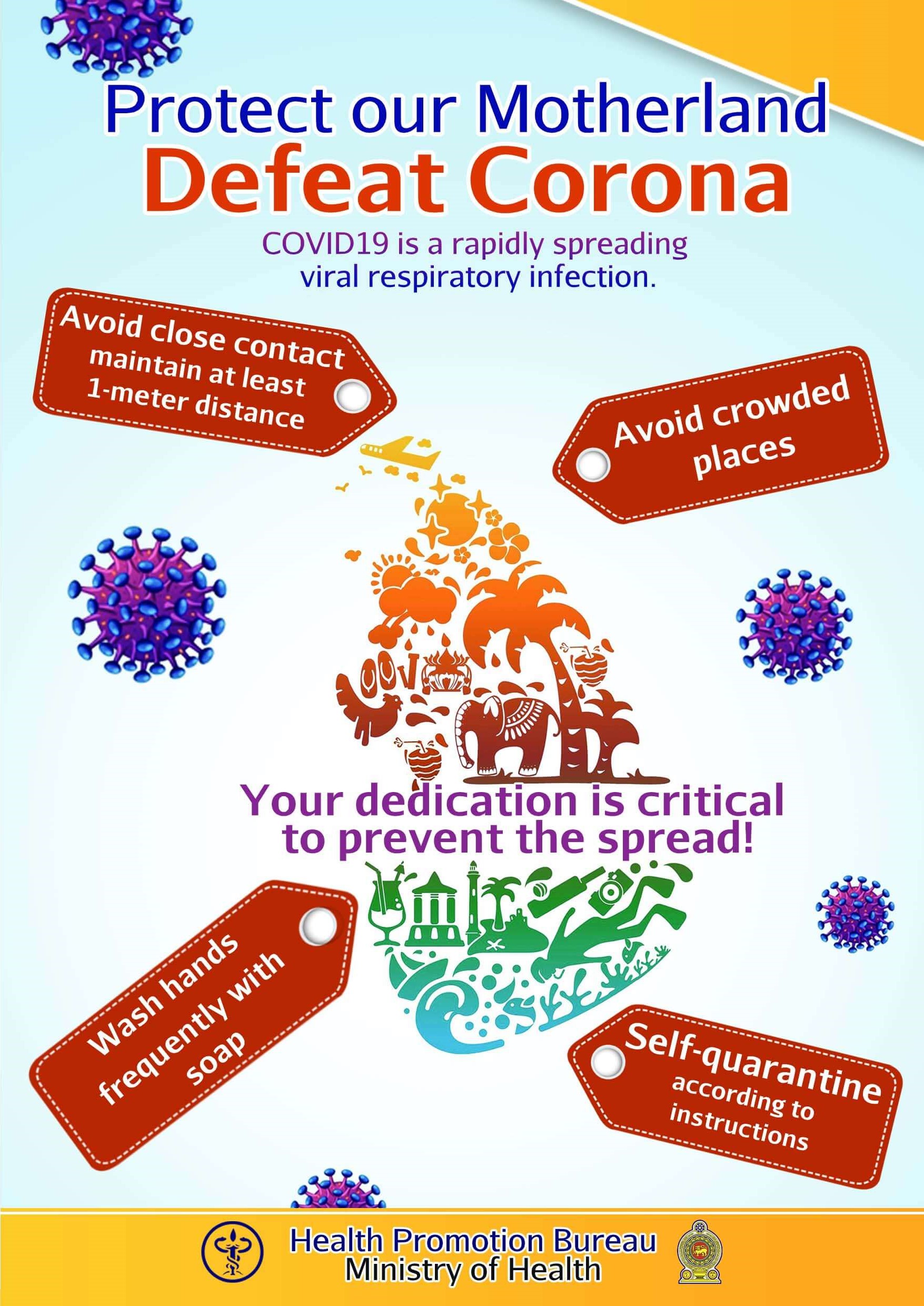
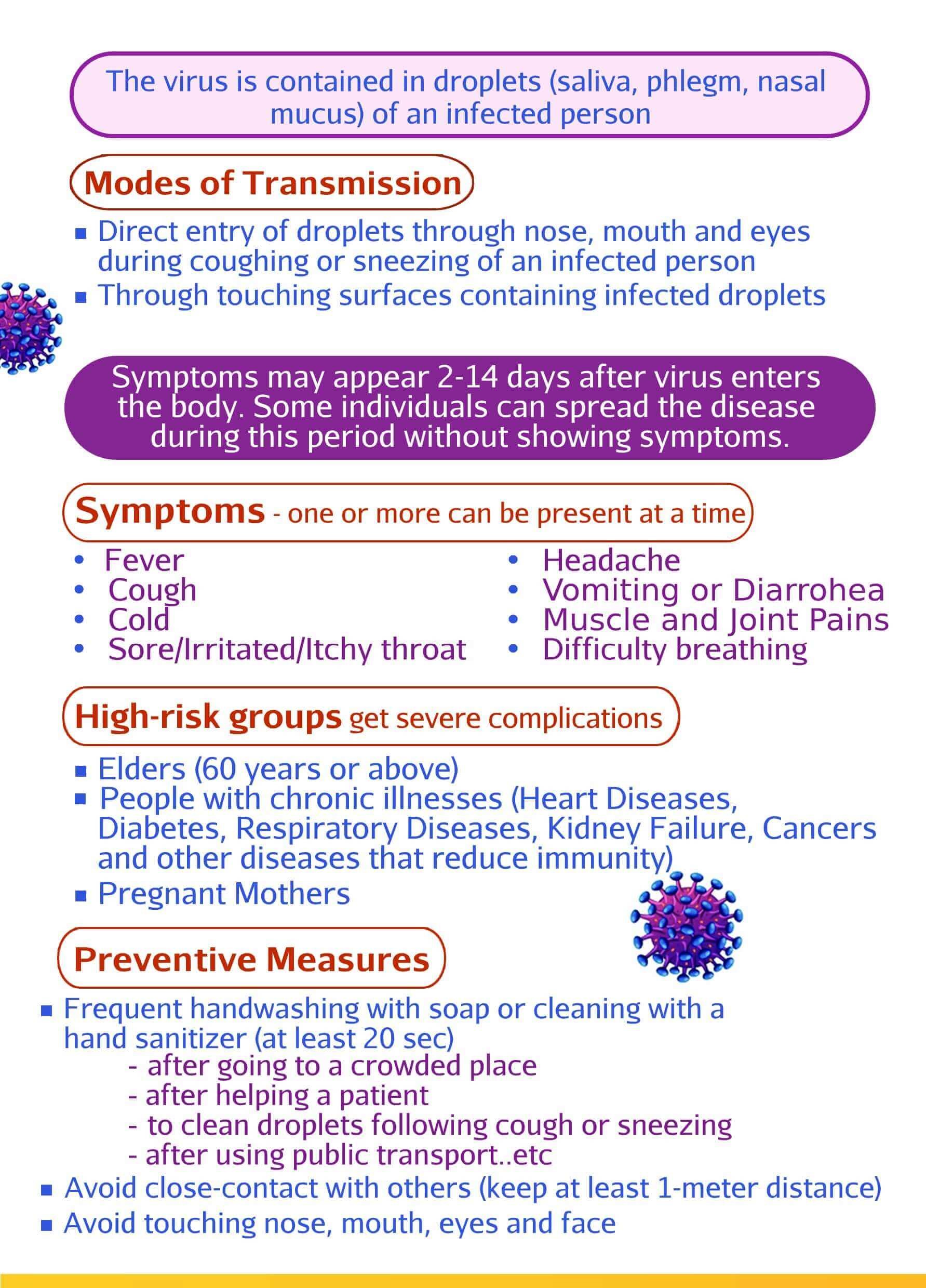

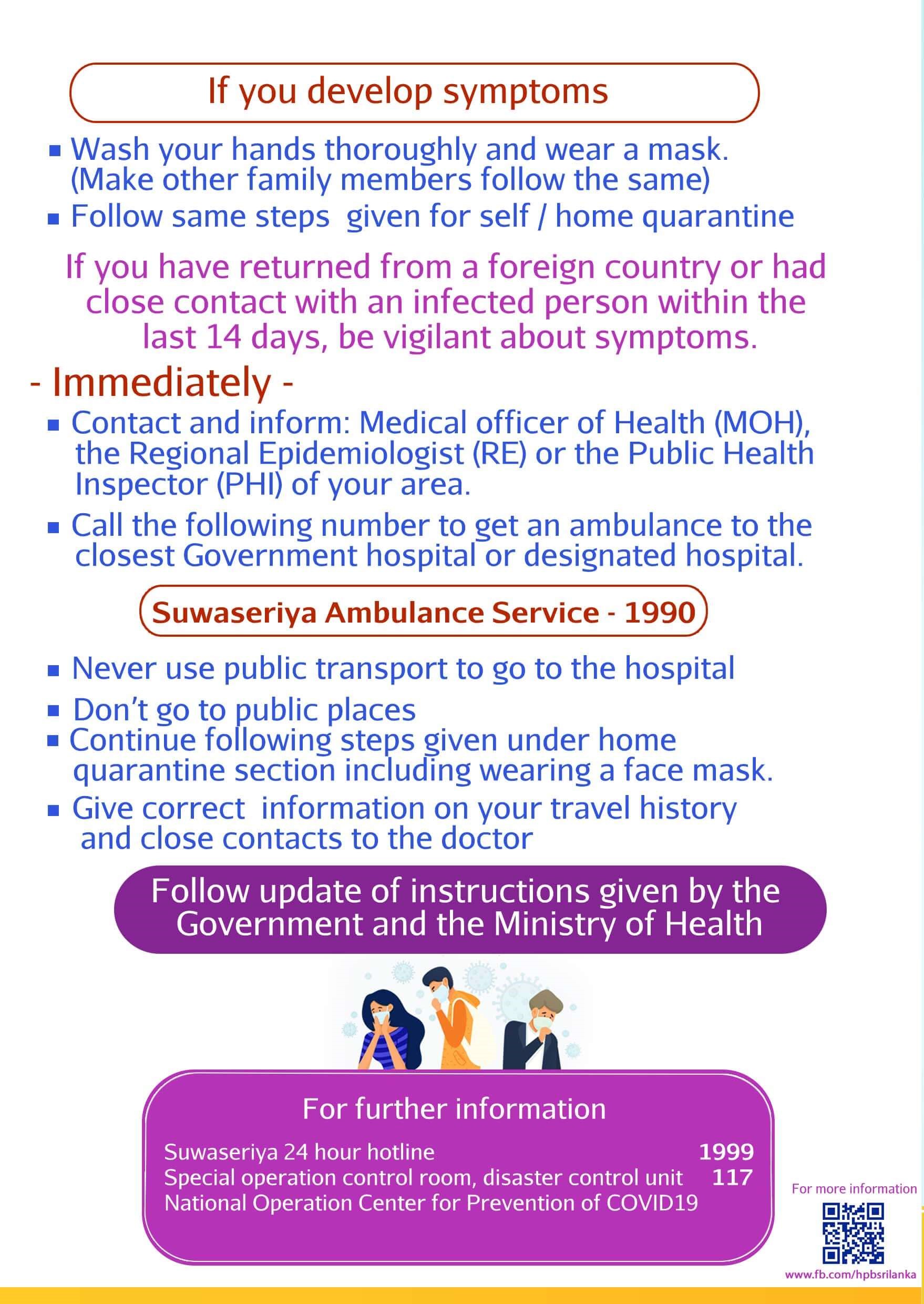
Image source : Health Promotion Bureau
News & Events

2026.08.08 Inaugural event of the “Athtama” National Cleanliness Day program implemented under the “Clean Sri Lanka” national program
The inaugural event of National Cleanliness Day...

Awareness training program for community development council representatives
A training program to sensitize Community Development...


Other Divisional Secretariat Divisions
Main Menu
Reach Us
Colombo Divisional Secretariat
Colmbo,
Sri Lanka.
+94 332 222 235
info[at]colombo.ds.gov.lk